


Do Fixed Braces Hurt More Than Clear Aligner Treatment Does?

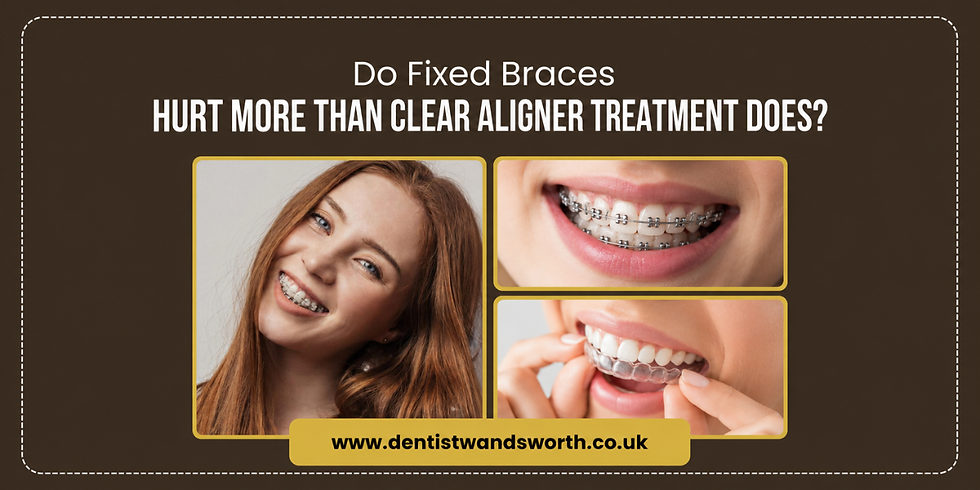
Anyone considering orthodontic treatment has likely asked the same question: will it hurt? It's a fair concern, especially when weighing up traditional braces against clear aligners. The truth is more nuanced than a simple yes or no, and understanding what each treatment actually feels like can help you make a confident, informed decision.
Understanding the Discomfort Factor
Discomfort during orthodontic treatment isn't really about the type of appliance you choose, it's about how teeth move. Both fixed braces and clear aligners work by applying gentle, sustained pressure to shift teeth into better positions over time. That pressure is what creates the sensation many people describe as soreness rather than sharp pain.
With fixed braces in London, the brackets and wires are bonded directly to the teeth and adjusted periodically by your dentist. Most patients report a few days of tenderness after the braces are first fitted, and again after each tightening appointment. This is your teeth and surrounding tissue adjusting to new pressure, and it typically settles within three to five days.
Clear aligners work differently. Each new tray in the series applies incremental pressure, so patients often feel mild tightness for a day or two when switching to a fresh aligner. Because the change happens more gradually and in smaller increments, many people find this sensation milder than the adjustment soreness associated with braces, though it tends to recur more frequently since aligners are typically changed weekly.
Where Braces and Aligners Differ in Daily Comfort
Beyond the movement itself, day-to-day comfort varies between the two options. Fixed braces include metal or ceramic components that can occasionally rub against the inside of the cheeks or lips, particularly in the first couple of weeks. Orthodontic wax is commonly provided to ease this irritation while your mouth adapts.
Clear aligners, being smooth plastic trays, generally cause less rubbing or irritation against soft tissue. However, because they're removable, there can be a brief pinching sensation each time a new tray is inserted, which usually fades within a few hours.
It's worth noting that pain tolerance is highly individual. Some patients sail through fixed brace treatment with barely any discomfort, while others find aligner transitions more noticeable. Your dentist can offer guidance tailored to your specific case, oral anatomy, and treatment plan.
Fixed Braces Prices and What They Reflect
When researching fixed braces prices, it helps to understand what influences the overall cost. Treatment length, the complexity of the tooth movement required, and the type of bracket material used (such as metal or ceramic) all play a role. More complex cases involving significant misalignment or bite correction generally require longer treatment times, which can affect the final price.
Many people assume aligners are always the pricier option, but this isn't a fixed rule. Costs depend heavily on individual circumstances, so it's best to get a personalised assessment rather than relying on general assumptions. A thorough consultation will give you a clear breakdown of what to expect, both in terms of comfort and investment.
Managing Discomfort During Treatment
Whichever option you choose, there are simple ways to manage any soreness:
Stick to softer foods for the first few days after fittings or new aligner trays
Use a saltwater rinse to soothe irritated gum tissue
Apply orthodontic wax over brackets that cause friction
Take over-the-counter pain relief if needed, following standard guidance
Stay consistent with aligner wear to avoid prolonging the adjustment phase
Most discomfort, regardless of treatment type, is temporary and manageable with these straightforward steps.
Choosing the Right Treatment for You
Comfort is just one piece of the puzzle when deciding between fixed braces and clear aligners. Lifestyle, the complexity of your bite, aesthetic preferences, and budget all matter too. Fixed braces tend to suit more complex cases requiring precise control over tooth movement, while aligners often appeal to those wanting a more discreet, removable option for milder to moderate corrections.
Rather than focusing solely on which option might hurt less, it's worth considering which treatment will deliver the results you want within a timeframe and routine that suits your life. A detailed consultation is the best way to weigh these factors against your personal comfort expectations.
Get Expert Advice Near You
If you're weighing up fixed braces in Southwest London or considering how aligners compare, speaking with an experienced dental team can make all the difference. Local expertise means you'll get advice grounded in real patient experiences from your area, rather than generic information.
For those exploring fixed braces in Wandsworth, Dentist Wandsworth offers thorough consultations to assess your individual case, discuss realistic expectations around discomfort, and provide a transparent cost breakdown. Our team takes the time to explain each stage of treatment, so you know exactly what to expect from the very first appointment through to your final result.
Ultimately, neither fixed braces nor clear aligners should involve significant pain when properly fitted and monitored by a qualified professional. Mild, temporary soreness is a normal part of the process, a sign that your teeth are moving in the right direction. Book a consultation today to discuss which treatment path is best suited to your smile goals and comfort preferences.

Comments